Three new kitchen guides: meat temperatures, pasta and rice per person, and the weight of berries
Three new kitchen guides: the right internal temperature for meat and Christmas ham, pasta and rice per person, and what a litre of strawberries, blueberries and lingonberries weighs.
The kitchen section has three new guides: on internal temperatures, on how much pasta and rice to cook per person, and on what a litre of berries weighs. Each guide answers the question first, has tables you can print and says where its numbers come from. All three sit under Kitchen on the guides page and in the menu under Guides.
The three guides
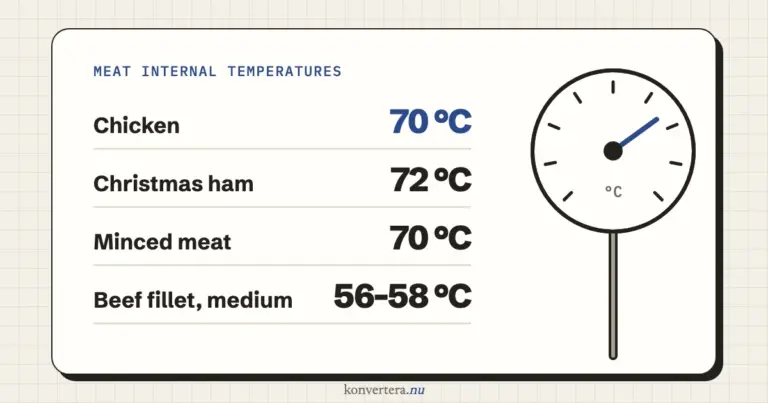
Internal temperatures for meat, chicken and Christmas ham: chart
The right internal temperature for beef, pork, lamb, chicken, turkey and Christmas ham in Celsius and Fahrenheit, what applies to minced meat and in…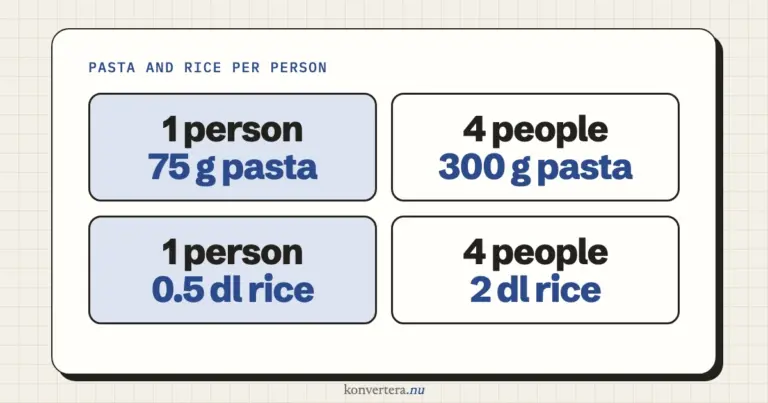
How much pasta and rice per person? Grams and cups
How much dry pasta and rice to cook per person, tables for 1-10 people, what it weighs cooked and how much water it needs.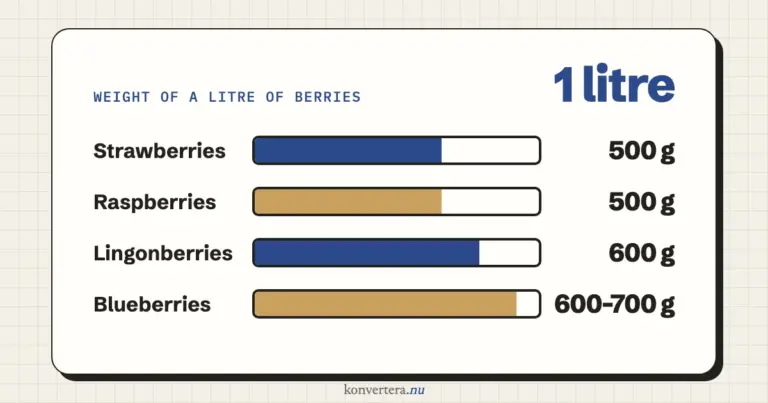
How much does a litre of berries weigh? Strawberries, blueberries and more
What a litre of strawberries, blueberries, lingonberries, raspberries and other berries weighs, berries in dl and grams, and how many litres a kilo is.
Chicken should reach 70 °C (158 °F) inside and a Swedish Christmas ham is perfect at 72 °C (162 °F). Allow 75 g of dry pasta or 0.5 dl (about 1/4 cup) of uncooked rice per person. A litre of strawberries weighs about 500 g and a litre of blueberries 600-700 g.
Oil, salt and cocoa in grams per decilitre
The guide grams per decilitre has three new rows as well. 1 dl of rapeseed oil weighs 92 g, 1 dl of fine salt 125 g and 1 dl of cocoa powder 40 g. The oil is calculated from the density in the Codex Alimentarius food standard, and salt and cocoa come from ICA’s conversion table.
Where the numbers come from
The internal temperatures come from the Swedish meat and poultry industry bodies, Svenskt Kött and Svensk Fågel, and from Livsmedelsverket, the Swedish Food Agency. The pasta and rice portions come from Arla, Kungsörnen and Ben’s Original, and the cooked weights from Livsmedelsverket. The berry weights come from Törsleffs and Livsmedelsverket’s portion guide. Each guide links to its sources, and where a source lacks a value the guide says so instead of guessing.